 Cordanis
Guide
How do I prep for a first meeting with a VP at a target account?
Learn the person and the company's priorities in their own words, then bring a point of view on what matters to them and how you could help. Send a short agenda ahead, prepare questions only they can answer, and decide before the meeting what you'll ask for at the end.

Start with the person, not the title
A first meeting with a vice president goes better when you know who you're meeting. Spend the first part of your preparation on the person.
Look at their role and how long they've held it. Someone a few months into a new job may still be forming a plan and may welcome an outside view. Someone five years in likely has a plan and will judge you against it. Look at where they worked before, because a leader who came from a company that used a product like yours already has an opinion about it. Work out what they own: the teams that report to them, the budget they likely control and the results they're measured on.
Then find what they've said in public. Conference talks, podcasts, interviews, LinkedIn posts and quotes in the company's press releases tell you what they care about in their own words. If they speak on the company's earnings calls, read what they said and what analysts asked them. Business-unit leaders more often appear at investor days, where a company presents each unit and its numbers. A phrase the VP has used in public is the best language you can use back to them.
Last, find out why they took the meeting. Ask the person who set it up what was said, and read the invitation again. A VP who agreed because a colleague asked expects something different from one who answered your email about a specific problem.
Read the company's priorities in its own words
The company's own documents tell you what matters to it more directly than any summary of them.
For a U.S. public company, start with the annual report on Form 10-K. The SEC's guide to reading a 10-K calls Item 1, the business description, a good place to start to understand how the company operates. Item 1A covers the most significant risks, and the guide notes that companies generally list them in order of importance. Item 7, management's discussion and analysis, gives management's perspective on the year in its own words, including known trends or uncertainties that could affect results. Then read the latest earnings call: the prepared remarks say what management wants investors to hear, and the analysts' questions show what investors doubt.
For any company, read the press releases from the last two quarters and the job postings in the VP's function. A company hiring for several roles under one leader is telling you what that leader is building, and the lines that describe each job tell you the work in the company's own words. For a private company, add interviews with the chief executive, the company blog and any funding announcements.
Finish this step with three things written down: what the company says it's trying to achieve this year, the risk it worries about most in the VP's area, and one phrase from its own documents that you can quote back accurately.
Bring your own history and a point of view
Before you meet a VP, know what your own company already knows about the account, so they never have to repeat it. Check the CRM for past opportunities, why they were won or lost, and what the account already buys from you. For an existing customer, read recent support tickets and ask the customer success manager how things are going. Ask colleagues who has met anyone there. Walking in unaware of an open escalation, or of a deal your company lost there last year, costs credibility that is hard to win back.
Then write a point of view: a short, specific view of what matters to them and how you could help. Five sentences is enough, one for each of these: what the company is trying to do, in its own words; where that likely puts pressure on the VP's team; what you've seen companies like them do about it; how you could help, specifically; and what you'd need to learn in the meeting to know whether you're right.
Treat the point of view as a hypothesis, and say so in the meeting: "Here's what we've seen at companies like yours. Tell me where it's wrong for you." A specific view gives the VP something to correct, which is easier for them than filling a blank page, and the correction is often the most useful thing you'll hear.
Prepare their questions, send an agenda and plan the ask
Write three to five questions that only this VP can answer. A question their website answers wastes their time. A good question uses what you found: "Your last earnings call said you're consolidating suppliers by the end of next year. What has to be true in your team for that to work?" Put the most important question first, in case the meeting runs short.
Send a short agenda a day or two ahead. It needs three things: why you're meeting, two or three topics, and what you'd like both sides to leave with. Ask whether they'd add or change anything, and confirm who else will attend. The agenda lets the VP bring the right people. Keep to the time you asked for.
Decide before the meeting what you'll ask for at the end. A first meeting rarely ends in a purchase, so size the ask to a first meeting: a working session with the people on their team who own the problem, an introduction to the executive who owns the budget, or a time to come back with a short written proposal. Ask for a date, not a promise to stay in touch. Then send a follow-up the same day that says what you heard, what you agreed and the next step, written so the VP can forward it to the people who need to see it.
A prep checklist for a first VP meeting
| Step | Where to look | What you're looking for |
|---|---|---|
| The person | LinkedIn, the leadership page, press releases, talks and podcasts | Time in the role, what they own, where they came from, what they've said in public |
| Why they're meeting | The invitation, and the colleague who set it up | What they expect from you |
| The company's priorities | 10-K Items 1, 1A and 7, the latest earnings call, recent press releases | What it's trying to do and what worries it, in its own words |
| The VP's plans | Job postings in their function | What they're hiring for, and so what they're building |
| Your history | CRM, support tickets, colleagues | Past deals, open issues, who on your team has met whom |
| Point of view | Your notes from the steps above | Five sentences on what matters to them and how you could help |
| Questions and agenda | Your point of view | Three to five questions only they can answer, and an agenda sent ahead |
| The ask | Your sales process | One specific next step, with a date |
Work through this prep checklist in order, because each step feeds the next. For a first meeting with one VP, an hour of focused reading is a reasonable budget. Save what you find on the account, in the CRM or a shared account document, so the next meeting starts from it.
Where Cordanis fits
If you meet a new VP once a month, a checklist like the one in this guide and an hour of reading will serve you well, and a chat assistant can help you summarize a 10-K or an earnings call.
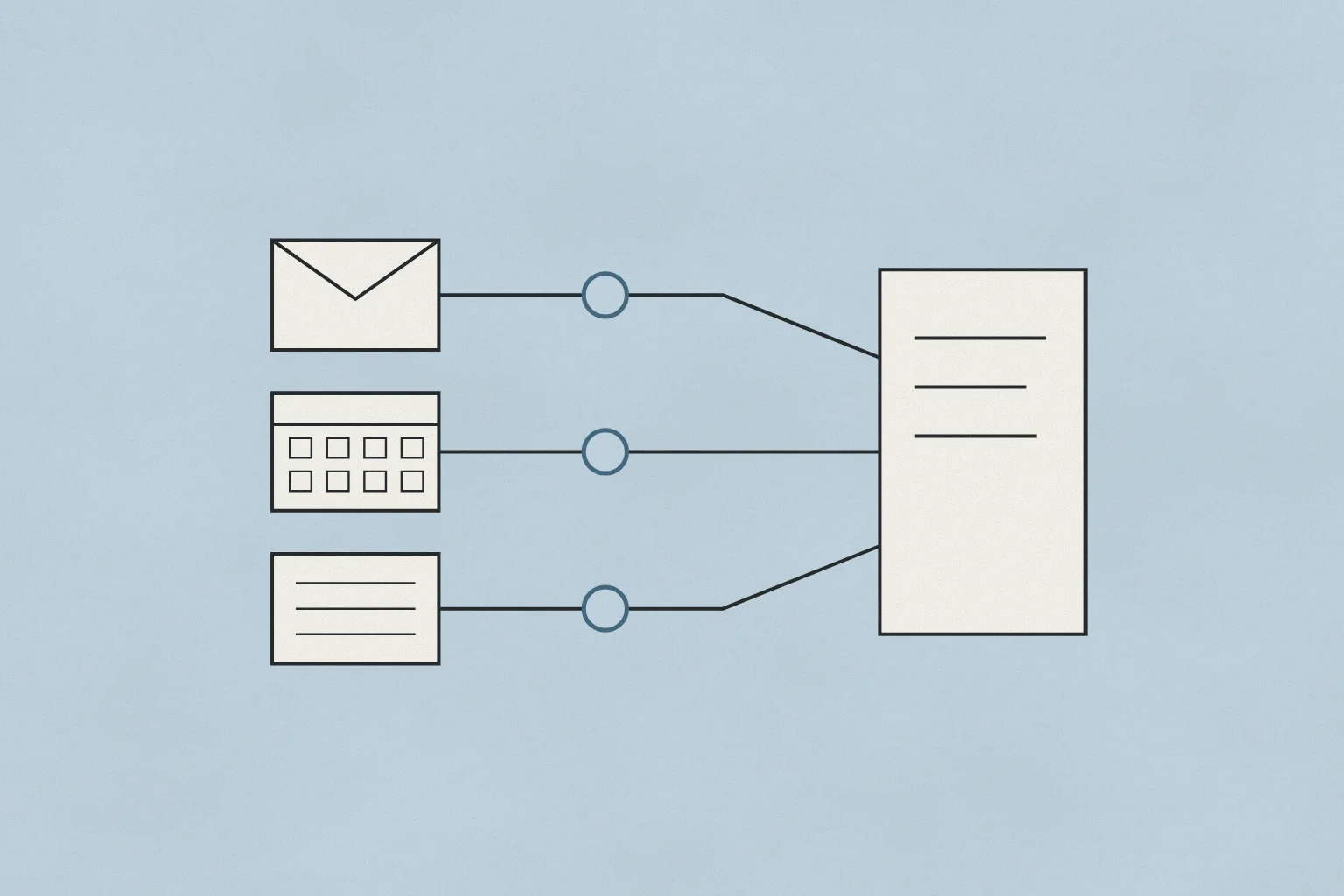
Cordanis is the workbench for account executives, for when meetings come every week across a large book. It keeps a record of each account from your team's mail, meetings and CRM. It researches accounts and writes each one's thesis: the account's point of view, covering what matters to them, where the business is going and why your company can help.
Before a meeting, Cordanis sees it on your calendar and writes a brief from the account. Ask for more, and it improves the brief in place. Because research, the thesis, decks, meeting briefs, transcripts and outreach are saved with the account, each brief starts from everything already done there.
After the meeting, Cordanis can file the notes you already take in Granola, or an uploaded transcript, on the account. It drafts the follow-up, and the email sends only when you approve it, from your own Gmail or Outlook mailbox. If the VP replies, the reply lands on the account, and you approve the answer and any invite.
Your CRM stays the system of record. Cordanis works with Salesforce, HubSpot or Zoho CRM and keeps no pipeline of its own.
Questions
How long should I spend preparing for a first meeting with a VP?
An hour is a reasonable budget for a first meeting, about half of it reading and the rest on the point of view and the questions, since those are what the VP will notice.
Should I send an agenda before a first meeting with a VP?
Yes. Send a short agenda a day or two ahead with the purpose, two or three topics and what you'd like both sides to leave with. Ask whether they'd change anything and who else will attend.
What should I ask a VP in a first meeting?
Ask three to five questions that only they can answer, built from what you read: their plans, the pressure on their team and how they'll judge success. Avoid anything their website or annual report already answers.
What should I ask for at the end of a first meeting with a VP?
Ask for one specific next step sized to a first meeting, such as a working session with their team or an introduction to another executive, and ask for a date. Send a follow-up the same day that records what you agreed.
Does Cordanis write meeting briefs?
Yes. Cordanis sees the meeting on your calendar and writes a brief from the account's record before you walk in. Ask for more, and it improves the brief in place.
Cordanis is the workbench for account executives. It keeps each account's record from your mail, meetings and CRM, and drafts the next move for you to approve. What Cordanis is · Trust