 Cordanis
Guide
How do account executives cover a large book of named accounts without letting some go dark?
They decide what covered means and check it on a rhythm, so no account depends on memory. An account is covered when someone at the top knows you and has talked with you recently. Sort the book into tiers with their own rhythm, review the quiet accounts weekly, and reach out for reasons the account gives you.
Decide what covered means before you count anything
Accounts often go dark in a large book because nobody defined what covered looks like, so the quiet ones never trip an alarm.
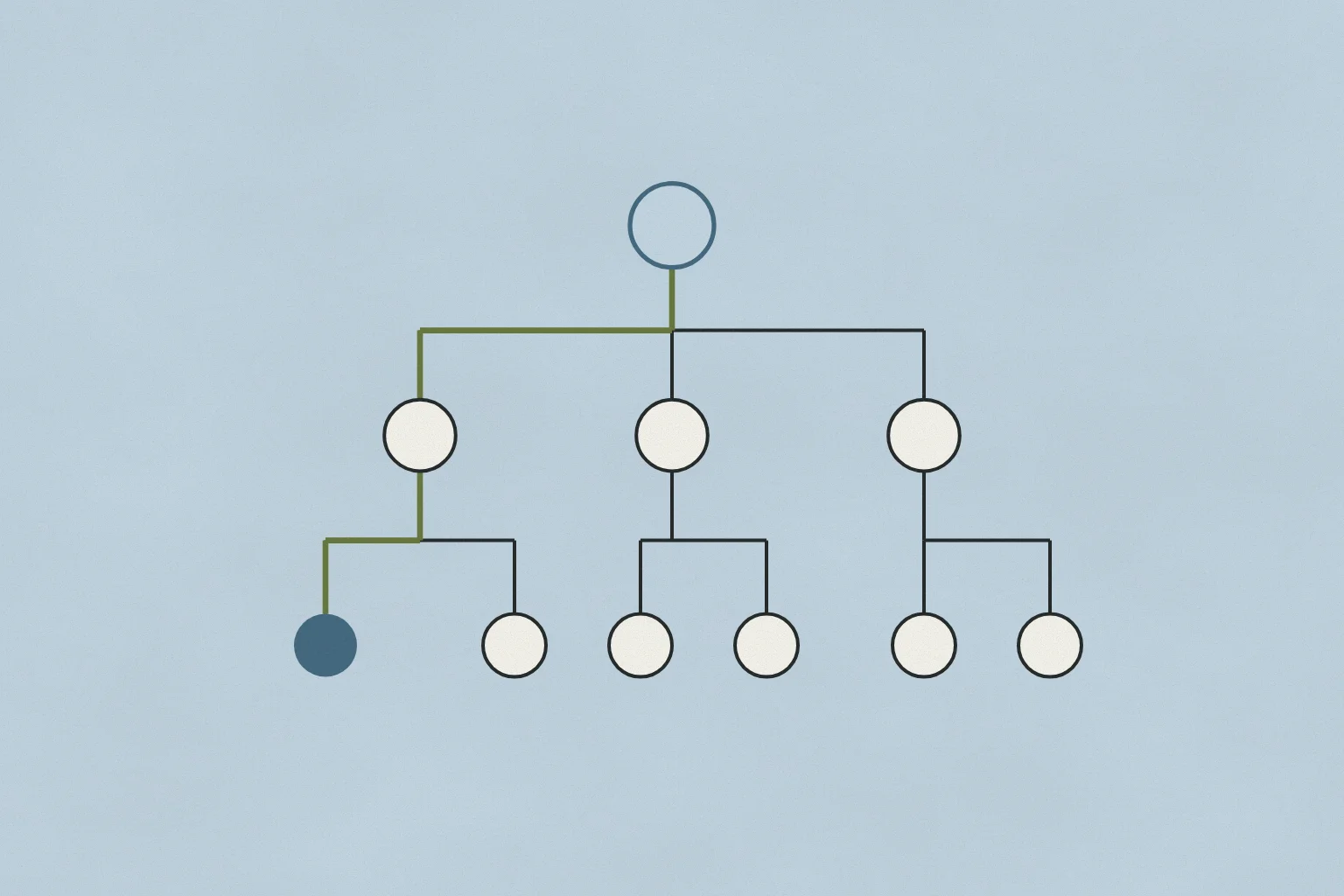
A useful definition: an account is covered when someone at the top of it knows you, and you have had a two-way exchange with them inside a recent window. The top means the executive who owns the budget or the problem you solve, usually a C-level leader or the vice president of the function you sell to. Knowing you means they have replied, met you or taken a call, not that they received a sequence.
The window depends on the account. A strategic account you could win this year might need a real conversation every 60 days, while a smaller one might be fine at six months. What matters is that the window is written down, so an account crossing it is a fact rather than a feeling.
A last-activity date in the CRM counts whatever was logged, including a closed task or an email nobody read, and it says nothing about who at the account was involved. An account can show activity last week and still have no executive who would recognize your name. When you check coverage, look for the person and the date of the last real exchange.
Sort the book into tiers, each with its own rhythm
Treating every account the same is how the middle of a book goes dark. Tiers decide in advance how much attention each account gets, so the loudest accounts don't take it all.
Sort by fit and timing. Fit is how well the account matches what you sell and how large the opportunity could be. Timing is whether something is happening there now: a new leader, a new initiative, a renewal, or a problem the company has named in public. Strong fit with live timing goes in the top tier, strong fit without timing in the middle, and weak fit at the bottom or set aside on purpose.
| Tier | Share of the book | What covered means | How often you touch it |
|---|---|---|---|
| Tier 1 | About a tenth | Two senior people know you, and one has talked with you in the last 60 days | A touch on the account every two weeks, spread across its people, each with a reason from the account |
| Tier 2 | About a third | One senior person has replied to you or met you in the last 90 days | Monthly, plus whenever the account gives you a reason |
| Tier 3 | Most of the rest | You know who the senior people are, and one has replied to you or met you in the last six months | Quarterly, plus whenever the account gives you a reason |
| Set aside | Whatever doesn't fit now | Nothing, by choice, with the reason written down | Reviewed once a quarter |
The shares and windows in this tier plan are a starting point to adjust, not a benchmark. The test is whether the rhythm fits in your week; if you can't do the Tier 1 work for every Tier 1 account, the tier is too big. Re-sort every quarter, and whenever timing changes at an account.
Find the accounts going quiet in a weekly review
A tier plan only works if something checks it, and the simplest check is a short weekly review at a fixed time. Thirty minutes on Friday afternoon or Monday morning is a reasonable start.
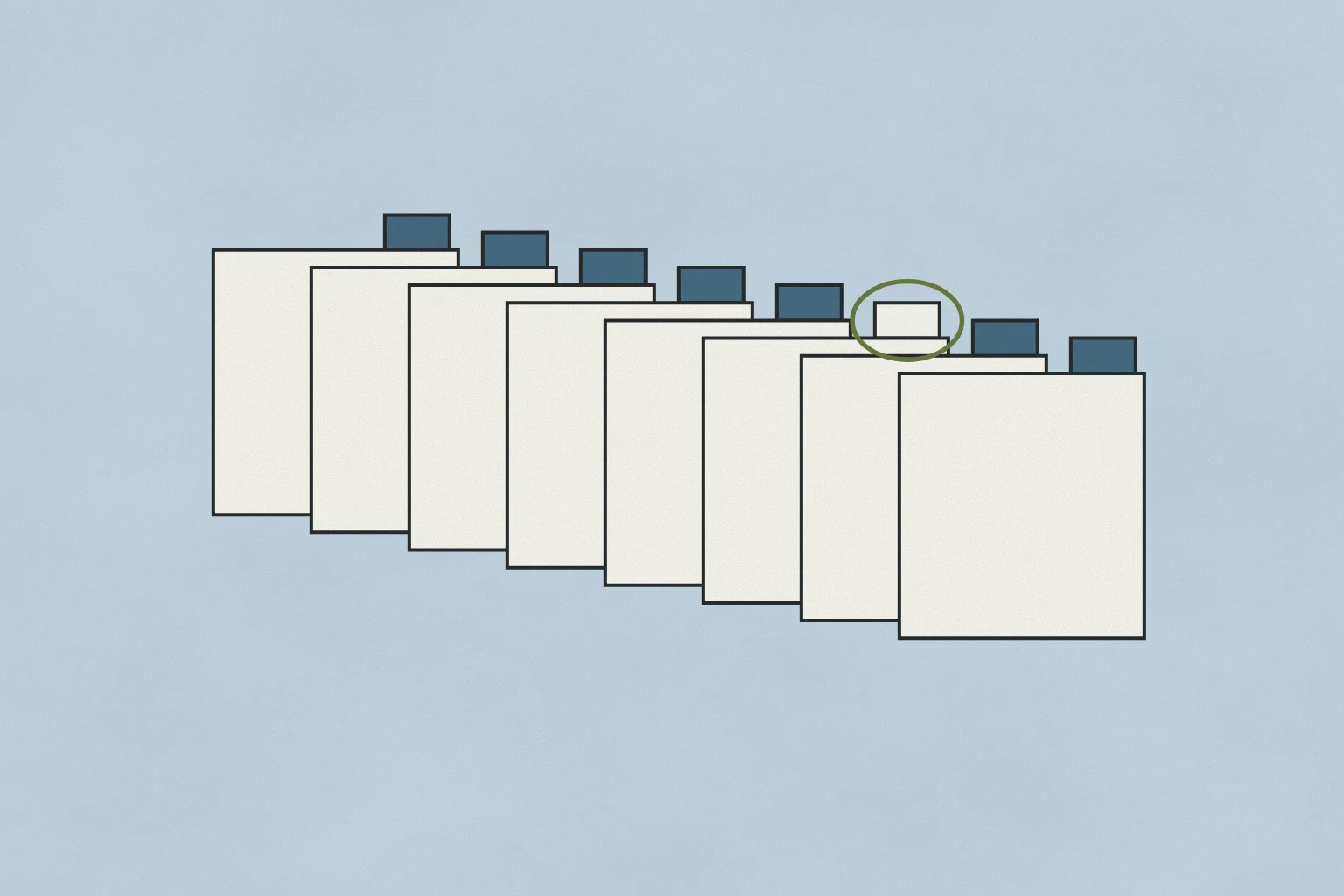
Begin with a list: every account whose coverage window has passed, and every account whose window will pass in the next two weeks. Build it from the date of the last real exchange with a senior person, not the last activity logged. If your CRM can't produce that, keep the date in a field on the account.
For each account on the list, answer four questions. Who was the last senior person we spoke with, and when? Is that person still there, in the same role? Is there a reason to reach out now? What is the next move, and who makes it?
Then make one of three decisions. Reach out this week, with a specific reason. Move the account to another tier, because its fit or timing has changed. Or set it aside, with the reason and a date to look again. Every account leaves the weekly review with one of those decisions, so nothing stays quiet by accident. If the list is longer than you can act on in a week, the tiers are too large or the windows too short, and the plan should change.
Reach out for a reason the account gives you
A note that says "just checking in" gives an executive nothing. A better reason comes from the account itself, and a large book produces plenty of them.
For U.S. public companies, the filings are the most reliable source. Under the SEC's Form 8-K rules, a company must report, generally within four business days, when its chief executive, president, chief financial officer, principal accounting officer or chief operating officer is appointed or leaves, when another named executive officer leaves, and when a new director is elected. The quarterly earnings call says what management is focused on, and the analysts' questions show what investors doubt. The annual report on Form 10-K lists the risks the company considers most significant, in Item 1A.
For any company, watch press releases, acquisitions, product launches and job postings. A company hiring several people into one function is telling you what it's building. LinkedIn Sales Navigator can alert you to news at the accounts you save and when a saved lead changes jobs or roles, and a Google Alert on the company's name catches press coverage.
A reason is only useful if it connects to something you can help with. A note that congratulates someone and asks for a meeting is still a check-in. A note that names the news, says what it tends to mean for a team like theirs, and offers one specific idea is worth answering.
Know more than one person, and keep notes the next person can find
Many accounts go dark because the one contact left, changed roles or stopped answering, and there was no one else. Knowing more than one person at each important account is the best protection a book has.
For Tier 1 accounts, aim for two senior relationships in different parts of the business, such as the executive who owns the budget and the one who owns the problem. For Tier 2, know one senior person and the next one you'd approach. Count your whole team's relationships, not only your own. Your executive sponsor, sales engineer and customer success manager each know people, and on Tier 1 accounts it helps to pair one of your executives with one of theirs. When a contact goes quiet, the second relationship tells you whether the account has gone quiet or only one person has. The guide on finding the executives at an account you haven't met covers how to find that second person.
Notes are the other half. What you know about an account only counts as coverage if someone else can find it, so keep it on the account, in the CRM or a shared account document, not in your inbox. A short note answers the same five questions every time: who we know there and how well, what they care about this year, what was said in the last real conversation, why we can help, and the next reason to reach out. When the territory changes hands, the next rep starts from your notes instead of from nothing.
Where Cordanis fits
Covering a book this way works with a CRM, a calendar and a weekly habit. If your team already keeps coverage dates and account notes in Salesforce or HubSpot, keep doing it there.
Cordanis is the workbench for account executives, built for keeping a large book covered. It keeps a record of each account from your team's mail, meetings and CRM. Its Book shows where no one at the top of an account knows you, across the whole book at once.
From there, one ask writes the pursuits, each from its account's thesis: what matters to them, where the business is going and why your company can help. Cordanis finds the executives you haven't met, through its own people data, or through Apollo when your team has connected it, and proposes them for you to approve. Through the day it catches replies, checks accounts and notes CRM changes on the account.
Each outreach step waits for you, written in full, and sends only when you approve it, from your own Gmail or Outlook mailbox. A reply stops the rest of the sequence. Meetings and replies land on the account, and the record is shared with the account's team. Cordanis works with Salesforce, HubSpot or Zoho CRM, which stays the system of record. It is not a volume sequencer, and it has no dialer.
Questions
How many named accounts can one account executive cover well?
There is no honest single number, because it depends on deal size, how much research each account needs and how many people you must know at each. Tiers fit the book to the week you have. If the Tier 1 work doesn't fit, raise it with your manager.
What counts as an account going dark?
An account has gone dark when its coverage window passes with no two-way exchange with a senior person. Emails nobody answered don't count, and neither does a contact who has left.
What is a good reason to contact a quiet account?
A good reason comes from the account, such as a new executive, an earnings call or a run of job postings in one function. Tie it to something you can help with, and offer one specific idea.
Does Cordanis replace my CRM?
No. Your CRM stays the system of record for accounts, opportunities and pipeline. Cordanis works with Salesforce, HubSpot or Zoho CRM and keeps no pipeline of its own.
Cordanis is the workbench for account executives. It keeps each account's record from your mail, meetings and CRM, and drafts the next move for you to approve. What Cordanis is · Trust